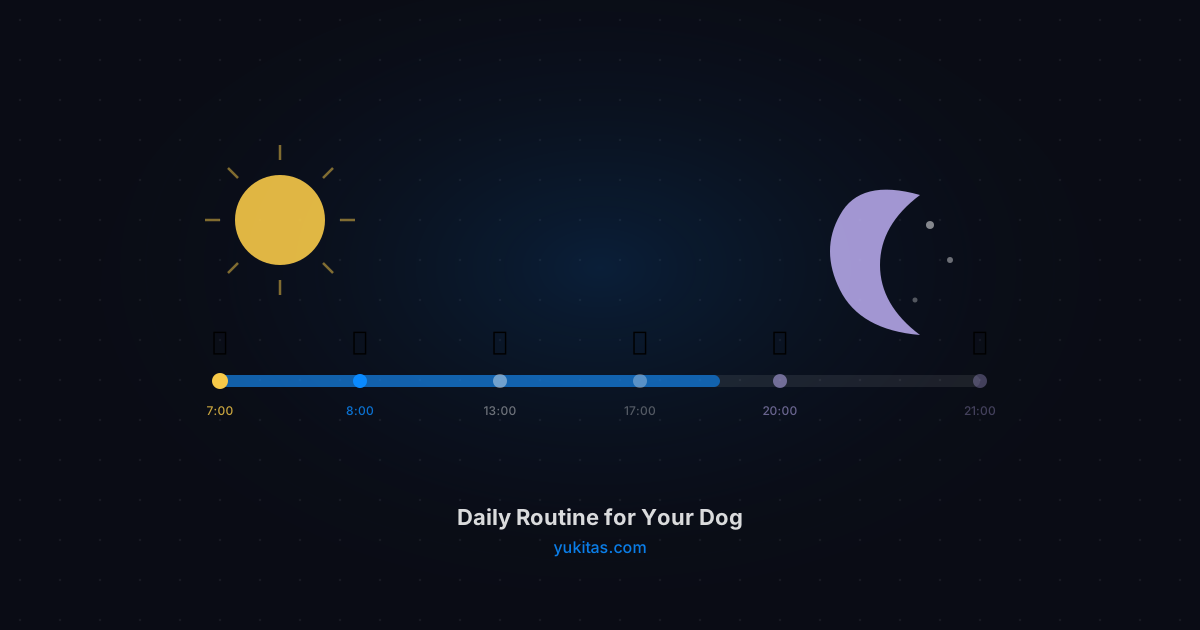
Dogs are creatures of habit. A predictable daily routine — consistent times for walks, meals, play and rest — reduces anxiety, prevents boredom behaviour like excessive barking or chewing, and makes your dog easier to live with. When your dog knows what to expect and when, they’re calmer and more settled throughout the day.
You don’t need a rigid minute-by-minute timetable, but anchoring the key moments of the day to consistent times makes a real difference.
The Building Blocks of a Good Dog Day
- Morning walkStart the day with a proper walk — not just a toilet trip. Morning exercise burns off overnight energy, stimulates the mind through sniffing and exploration, and settles your dog for the morning ahead.
- Meals at fixed timesFeeding at the same times each day — typically morning and evening for adults — supports digestion and makes it immediately obvious if your dog skips a meal (often the first sign something is wrong).
- Mental stimulationPhysical exercise alone isn’t enough. A short training session, a puzzle feeder, or a sniff-focused walk a few times a week tires a dog out in a different, deeper way.
- Play and bonding timeActive play — fetch, tug, or whatever your dog enjoys — builds the bond between you, provides an outlet for energy, and is genuinely enriching.
- Rest and downtimeDogs sleep a lot — often 12–14 hours a day. A calm rest period after exercise lets them recover and process what they’ve experienced. A well-rested dog is a more relaxed dog.
- Evening walkThe second anchor of the day. An evening walk provides a second dose of exercise and a toilet opportunity before the night. Many owners find this the best time for a longer, more relaxed walk.
A Simple Example Daily Schedule
This is a framework, not a prescription — adapt it to your own life and your dog’s breed and age:
- 7:00 — Morning walk (30–60 min)Good sniffing and exploration, not just a quick circuit.
- 8:00 — BreakfastFirst meal of the day, same time daily.
- 10:00 — Rest/downtimeDog settles while you get on with your day.
- 13:00 — Midday toilet break and short interactionA 10–15 min outing or play session helps break up a long indoor stretch.
- 17:00 — Play or training session (15–20 min)Mental engagement before the evening.
- 18:00 — DinnerSecond meal, same time daily.
- 20:00 — Evening walk (30–45 min)A calm, longer walk to end the day well.
- 21:00 onwards — Settled for the nightCalm, predictable wind-down. No rough play just before sleep.
Adjust for Your Dog’s Breed and Age
High-energy breeds like Border Collies or Vizslas need significantly more exercise and mental stimulation than lower-energy breeds. Puppies need shorter, more frequent outings; senior dogs may do better with gentler, more regular walks instead of one long one. The framework adapts — the principle of consistency doesn’t.
When Life Disrupts the Routine
No routine survives perfectly every day. If something shifts, try to keep the most important anchors — morning and evening walks, mealtimes — as consistent as possible. Dogs adjust to occasional disruption far better than to having no predictable pattern at all.
Tracking your dog’s day makes it easier to stay consistent. In the Yuki app, you can log walks, meals, training sessions and other activities in one place, and see at a glance how your dog’s day actually played out — helpful for spotting when the routine has drifted and for sharing it with a dog sitter or family member.
The Bottom Line
A daily routine doesn’t have to be elaborate — it just has to be consistent. Morning walk, meals, some mental stimulation, play, and rest. The predictability itself is what benefits your dog, reducing anxiety and settling behaviour over time.