Anxiety in dogs is more common than many people realize. Some dogs become anxious because of loud noises, separation, changes in their environment, lack of routine, past trauma, or even overstimulation during everyday life.
The good news is that small, consistent routines can make a real difference. Dogs are creatures of habit — and when life feels predictable, many anxious dogs begin to feel noticeably calmer, more secure, and more confident over time.
If you’ve been noticing anxious behavior in your dog and feeling unsure what to do, this guide is a good starting point. You don’t need a perfect plan — just small, consistent steps forward.
Signs Your Dog May Be Anxious
Every dog shows anxiety differently, but some common signs include:
- Excessive barking or whiningVocalization that goes beyond normal communication — especially triggered by being alone, loud sounds, or unfamiliar situations.
- Pacing or restlessnessUnable to settle, constantly moving from room to room, seeming unable to relax even in familiar surroundings.
- Destructive behavior when left aloneChewing furniture, scratching doors, or destroying objects — often a sign of separation anxiety rather than simple misbehavior.
- Shaking or hidingTrembling, hiding under furniture, or retreating to dark corners during stressful moments like thunderstorms or fireworks.
- Loss of appetiteRefusing food — especially during or after stressful events — can be a clear indicator of elevated anxiety levels.
- Excessive licking or chewingSelf-soothing behaviors like obsessive paw licking, chewing their own fur, or repetitive scratching can signal chronic stress.
- Trouble relaxing or sleepingAn anxious dog often can’t fully settle down — constantly alert, waking frequently, or appearing tense even when resting.
Why Routine Matters for Anxious Dogs
Predictability is one of the most powerful tools for reducing anxiety in dogs. When a dog knows what to expect — when they’ll be fed, walked, played with, and where they’ll sleep — the world becomes much less frightening.
Anxiety often thrives in uncertainty. A dog who doesn’t know what comes next is always on alert, always waiting for something unexpected to happen. A consistent daily routine removes much of that uncertainty and gives your dog something solid to hold on to.
Building a Calming Daily Routine
Creating a routine for an anxious dog doesn’t need to be complicated. The most important ingredients are consistency, predictability, and calm energy from you as the owner.
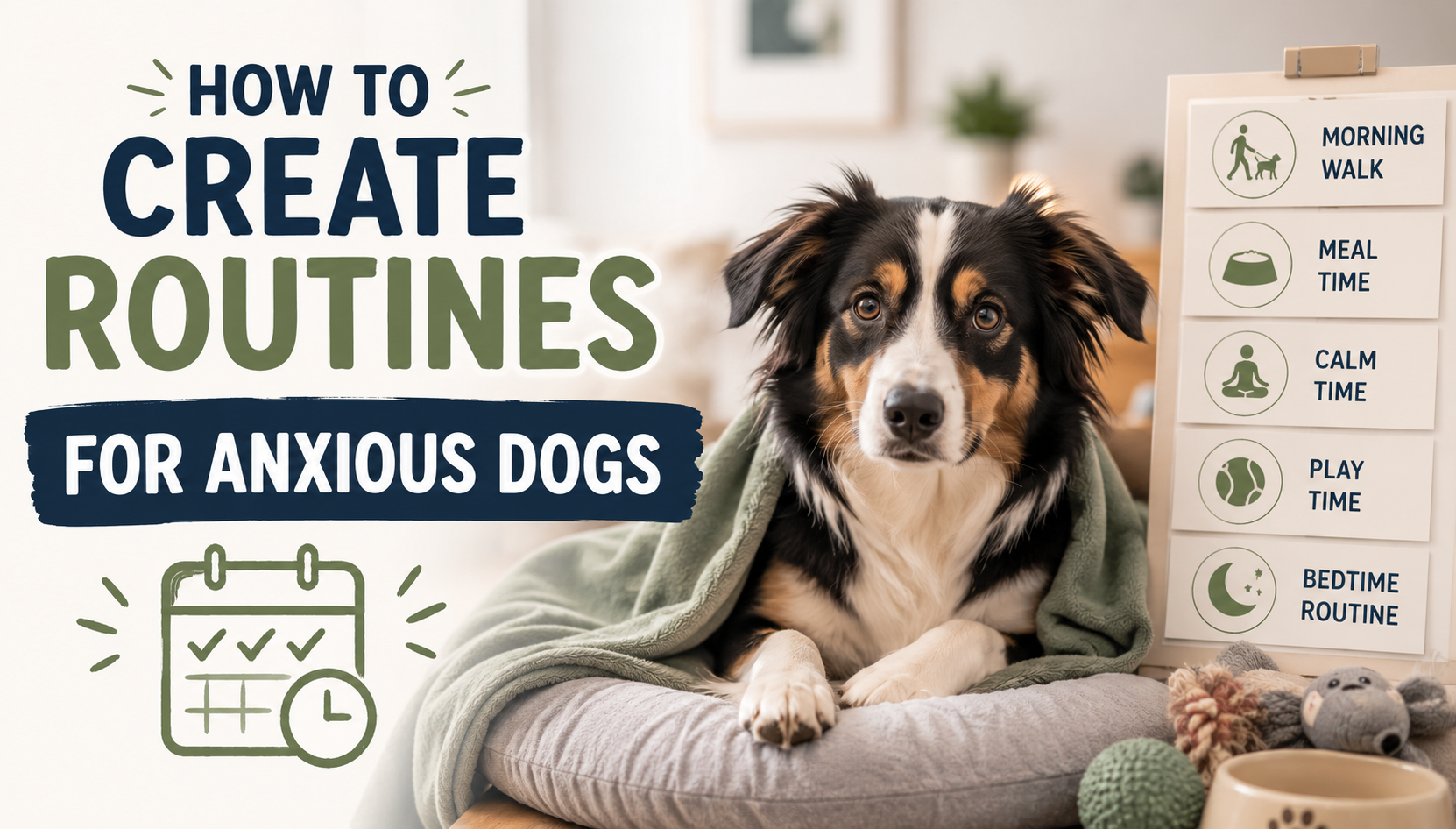
- Morning walk at the same time each dayStarting the day with a walk at a consistent time gives your dog immediate exercise, fresh air, and a reliable anchor for the morning — all of which reduce tension.
- Consistent feeding timesFeeding your dog at the same times every day creates a strong predictable rhythm and reduces food-related anxiety or urgency.
- Scheduled play and training sessionsShort, regular training or play sessions give your dog something positive and engaging to look forward to — and help build confidence through repetition and success.
- A safe, consistent resting spaceA dedicated, comfortable spot where your dog always rests gives them a reliable place to retreat and decompress — especially during stressful periods.
- A calm evening wind-downReducing stimulation in the evening — quieter activity, a final walk, and a calm bedtime routine — helps your dog transition smoothly to rest.
Practical Tips for Supporting Your Anxious Dog
Beyond the daily routine, a few additional strategies can help anxious dogs feel more secure:
- Stay calm yourselfDogs are extremely sensitive to their owner’s emotional state. Your calm, confident energy is one of the most reassuring things you can offer an anxious dog.
- Track patterns with an appUsing a dog care app like Yuki to log behavior, moods, walks, and feeding helps you identify what triggers anxiety and what helps your dog feel most calm.
- Work with your veterinarianIf anxiety is severe or affecting your dog’s quality of life significantly, your vet can help evaluate whether additional support — behavioral therapy or medical treatment — may be appropriate.
Progress Takes Time — and That’s Okay
Building routines for an anxious dog is a process, not an overnight fix. Some dogs respond quickly to increased structure; others need more time and patience. What matters most is consistency and your continued commitment to making their world feel safe.
Small improvements add up. A dog who used to bark for an hour when left alone might, over weeks, begin to settle within minutes. A dog who cowered at every sound might start reacting less. Progress isn’t always dramatic — but it is real, and it is worth it.
⚠️ Important: If your dog’s anxiety is severe, sudden, or significantly affecting their quality of life, please consult your veterinarian promptly. Anxiety can sometimes have underlying medical causes, and a professional assessment is always the right starting point for serious cases.